Types of Mosaic Art for Interior Design and Architectural Projects
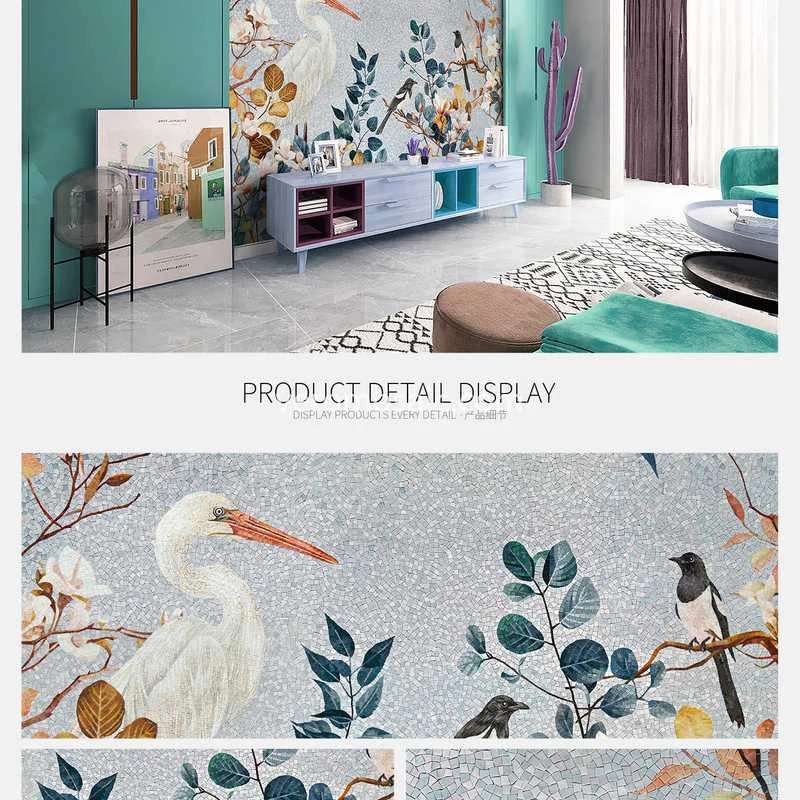
Types of mosaic art offer architects, interior designers, contractors, and importers a versatile way to add color, texture, and distinctive visual detail to commercial and residential spaces. Available in glass, natural stone, ceramic, porcelain, and mixed materials, mosaic designs can suit a wide range of architectural styles, from contemporary interiors to traditional decorative projects. Material selection, tile format, surface finish, and installation requirements determine the suitability of each option for a specific application.
Main Types of Mosaic Art for Interior Design
Glass mosaic art is widely used for its color clarity, reflective qualities, and design flexibility. Transparent, translucent, opaque, and iridescent finishes create different visual effects under natural and artificial lighting. Glass mosaics are suitable for bathroom walls, kitchen backsplashes, swimming pools, spas, and decorative feature walls, provided the selected product meets the requirements for its intended environment.
Natural stone mosaics, including marble, travertine, slate, and limestone, provide organic textures and distinctive surface variations. They are often specified for hotel lobbies, luxury residences, reception areas, feature walls, and selected flooring applications. Because natural stone can vary in color, veining, porosity, and surface hardness, buyers should confirm sealing requirements and maintenance recommendations before placing bulk orders.

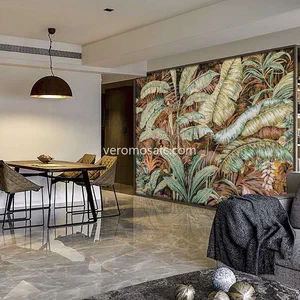
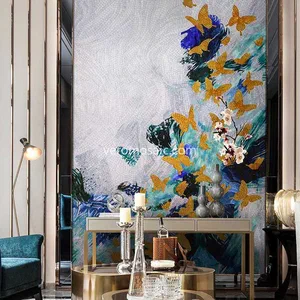
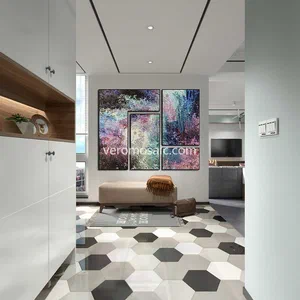
Ceramic and porcelain mosaics offer a broad range of colors, patterns, shapes, and finishes for practical architectural use. Porcelain options are particularly useful for projects requiring low water absorption and durable surfaces, subject to the product’s technical specifications. Metal, mirror, and mixed-material mosaics provide additional design possibilities for accent panels, retail interiors, hospitality projects, and bespoke decorative installations. Custom mosaic artwork can also incorporate geometric compositions, abstract imagery, floral motifs, logos, or architectural murals.
Key Features and Product Specifications
For B2B purchasing, mosaic products should be evaluated by material composition, manufacturing consistency, installation format, and performance requirements. Sheet-mounted mosaics can simplify handling and layout, while individually supplied tesserae allow greater flexibility for detailed artwork and custom patterns. Mesh backing, paper-facing, or other mounting methods may be available depending on the product and production process.
Typical specifications to confirm with a manufacturer include:
- Material: glass, marble,- Material: glass, marble, travertine, ceramic, porcelain, metal, or mixed materials
- Tile shape: square, rectangular, hexagonal, round, triangular, or custom-cut
- Surface finish: glossy, matte, polished, textured, transparent, or iridescent
- Mosaic size: individual tessera dimensions and overall sheet dimensions
- Thickness: determined by material, design, and intended installation
- Color and pattern: standard collections, coordinated colorways, or custom designs
- Installation requirements: backing type, compatible adhesive, grout, and substrate preparation
- Performance data: water absorption, slip resistance, chemical resistance, and durability where relevant
Exact dimensions, tolerances, packaging, and performance ratings should be confirmed against the manufacturer’s product data. For large projects, buyers should also request samples to assess color consistency, surface quality, joint alignment, and compatibility with surrounding finishes.
Applications for Commercial and Architectural Projects
Mosaic art is suitable for hotels, restaurants, shopping centers, offices, residential developments, wellness facilities, and public buildings. Interior applications include reception counters, feature walls, shower enclosures, decorative flooring, kitchen backsplashes, fireplaces, and custom wall murals. Exterior and wet-area installations require materials specifically rated for the relevant exposure, temperature changes, moisture levels, and cleaning conditions. Swimming pools and fountains need products and installation systems designed for continuous water exposure and the applicable chemical environment.
For importers, distributors, design studios, and construction contractors, sourcing decisions should balance appearance, technical performance, production capacity, lead time, and total project cost. When ordering custom mosaic art, provide drawings, dimensions, color references, installation locations, and estimated quantities. Confirm sample approval, batch consistency, protective packaging, and export documentation before production. Clear specifications help reduce installation problems, avoid unnecessary waste, and maintain a consistent finish across multi-unit developments or large architectural installations.
FAQ
Q: What types of mosaic art are suitable for commercial interiors?
A: Glass, natural stone, ceramic, and porcelain mosaics are common choices. The right material depends on the design concept, traffic level, moisture exposure, maintenance needs, and installation requirements.
Q: Can mosaic art be customized for architectural projects?
A: Yes. Manufacturers may offer custom colors, shapes, patterns, logos, murals, and project-specific dimensions, subject to design complexity, production capabilities, and minimum order quantities.
Q: What should buyers check before importing mosaic products?
A: Confirm material specifications, dimensions, finish, technical performance, sample quality, packaging, lead time, and order quantities. For wet areas or exterior use, verify that the product and installation system are suitable for the intended conditions.